


Table of Contents
- What Gold Plated Jewelry Actually Is
- The Plating Process and Why Base Metal Matters
- Gold Plated vs Gold Filled vs Solid Gold
- Pros and Cons of Gold Plated Jewelry
- How Long Does Gold Plating Last?
- How to Clean Gold Plated Jewelry Safely
- Is Gold Plated Jewelry a Good Investment?
- Skin Reactions and Hypoallergenic Options
- Repairability and Re-Plating Services
- Conclusion
- Frequently Asked Questions
Last Updated: September 22, 2026
What Gold Plated Jewelry Actually Is
Gold plated jewelry is a piece made from a base metal core that has been coated with a thin layer of gold through a process called electroplating. The amount of gold involved is measured in microns, and that number decides almost everything about how the piece will age.

At Zoha Los Angeles, we field the same question constantly: will this turn my finger green in two months? The honest answer depends far less on the word "gold" than on what sits underneath it and how thick the gold layer is. Below, we'll break down the plating process, the label terms that actually mean something, and how to judge whether a piece is worth your money.
The reason this matters: the term "gold plated" covers everything from a durable, water-resistant piece you can wear daily to a paper-thin coating that wears through in weeks. Both carry the same label. Only one is worth buying.
The Plating Process and Why Base Metal Matters
Electroplating is the process of using an electrical current to bond a thin layer of gold onto a conductive base metal. The base metal determines whether the piece corrodes, irritates skin, or holds its finish.
Common base metals include:
- Brass and copper - inexpensive, easy to shape, but prone to oxidation and skin discoloration over time
- Sterling silver - a precious metal base with higher intrinsic value, though softer and more prone to scratching
- Stainless steel - resistant to corrosion and tarnish, holds plating well, and is a strong choice for daily wear
A common mistake is assuming the gold layer does all the work. In practice, the base metal is the foundation. A reactive base like brass will eventually show through, and when it does, you get the greenish discoloration people complain about. A corrosion-resistant base like stainless steel keeps the piece stable underneath, so the plating has a solid surface to hold onto.
That's why the same "18k gold plated" label can describe two very different products.

Gold Plated vs Gold Filled vs Solid Gold
The three categories differ mainly in how much gold they contain and how that gold is applied. Understanding the distinction prevents you from paying solid-gold prices for a plated piece, or dismissing a plated piece that would serve you well.
Solid gold is gold all the way through, measured in karats. A 14k piece is roughly 58% gold; 18k is about 75%. It never wears through because there's no coating to wear. It also carries the highest price and the strongest resale value.
Gold filled jewelry bonds a thicker layer of gold to a base metal using heat and pressure, not electroplating. The gold layer is typically much thicker than plating, so gold filled pieces last considerably longer and hold value better than plated ones.
Gold plated jewelry uses the electroplating process described above. It's the most budget-friendly of the three and the most dependent on plating thickness and base metal quality.

Type |
Gold Content |
Typical Durability |
Relative Cost |
Resale Value |
|---|---|---|---|---|
Solid gold |
All the way through (14k-18k) |
Decades, refinishable |
Highest |
Strong |
Gold filled |
Thick bonded gold layer |
Years with care |
Moderate |
Limited |
Gold plated |
Thin electroplated layer |
Months to years |
Lowest |
Minimal |
How to Read Gold Content Labels
Labels tell you more than most shoppers realize, but only if you know which words carry weight. "18k gold plated" tells you the gold used in the plating is 18-karat, not that the whole piece is 18k. Those are very different claims.
Look for a stated plating thickness in microns, a named base metal, and any mention of tarnish resistance or hypoallergenic construction. Vague labels that say only "gold tone" or "gold finish" typically signal a very thin coating with no durability guarantee.
Pros and Cons of Gold Plated Jewelry
The case for gold plated jewelry rests on access: you get the look of gold without the price of solid gold, which makes it practical for trend-driven pieces, layering, and gifts.
The case against rests on longevity. A thin plating on a reactive base metal will wear through, and once it does, the piece can't be restored to its original finish without re-plating.
Pros:
- Budget-friendly compared to solid gold
- Lightweight and comfortable for daily wear
- Available in a huge range of designs, including statement and symbolic pieces
- Easy to replace or rotate without a major financial commitment
Cons:
- Plating wears down over time, especially on high-friction areas
- Lower resale value than solid gold or gold filled
- Quality varies enormously between makers
- Reactive base metals can cause skin discoloration
How Long Does Gold Plating Last?
There's no single answer, because plating life is a function of thickness, base metal, and how you wear the piece. A well-made plated piece worn occasionally can hold its finish for years. A thin plating worn daily against skin, sweat, and friction may show wear within months.
The variable that matters most is plating thickness, measured in microns. Thicker plating costs more to produce and lasts longer. Below roughly half a micron, you're looking at a coating that behaves more like a temporary finish than a durable one.
Wear Factors That Shorten Plating Life
Several everyday habits accelerate wear, and most people do all of them without thinking:
- Perfume and lotions applied directly onto the jewelry introduce chemicals that break down the gold layer
- Sweat and chlorine speed up corrosion on reactive base metals
- Friction from rings rubbing against fingers, or bracelets against wrists, thins the plating at contact points first
- Abrasive cleaning strips the finish faster than anything else
- Storing pieces loose together causes them to scratch each other's coatings
A common mistake is treating plated jewelry like solid gold and wearing it into the shower, the pool, and the gym. Even tarnish-resistant pieces last longer when you give them a break from constant moisture and friction.
How to Clean Gold Plated Jewelry Safely
The safe method is a mild soap solution, a very soft cloth, and gentle drying. Skip ultrasonic cleaners, polishing compounds, and anything labeled abrasive. Those remove the gold layer along with the dirt.
Here's the routine that works:
- Mix a few drops of mild dish soap into a bowl of lukewarm water
- Dip a soft microfiber cloth into the solution and wipe the piece gently
- Rinse with clean lukewarm water, never hot
- Pat dry immediately with a dry cloth
- Let the piece air dry fully before storing
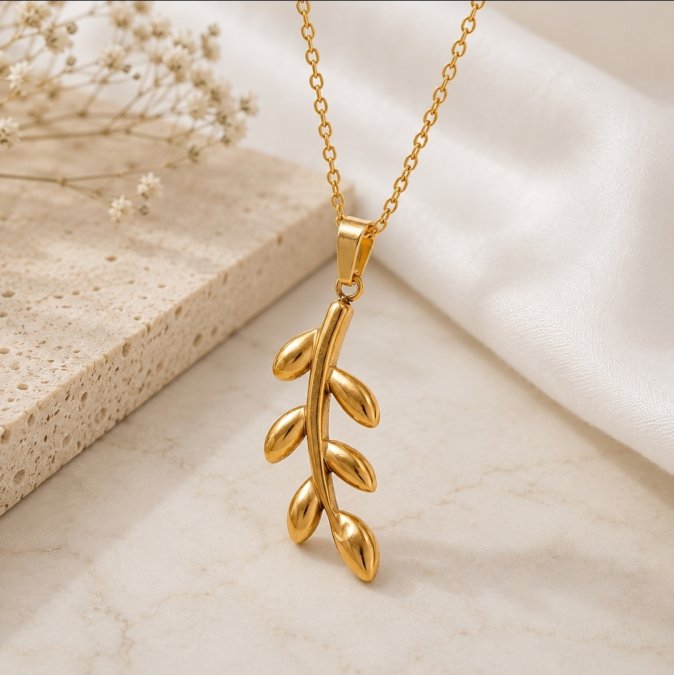
For daily care, the rule is simple: jewelry goes on last, after perfume and lotion have dried, and comes off first at night. Store each piece separately in a soft pouch or lined box to prevent scratching.
Is Gold Plated Jewelry a Good Investment?
The word "investment" is doing two different jobs in this question, and separating them is the whole answer.
Sparkly Paperclip Link Necklace →
As a financial investment, no. Plated jewelry has minimal resale value, and the reason is mechanical, not snobbery. Resale value in precious metals comes from recoverable metal content. A plated piece carries only a microscopic layer of gold, often well under a single micron on budget items, over a base metal like brass or copper that has little scrap value on its own. A refiner buying scrap prices the metal by weight and purity; the gold in a plated chain is too thin to separate economically, and the base metal is worth close to nothing. That's why you'll see plated pieces resell for a small fraction of their retail price, if they resell at all. Pawn shops and online resale platforms typically treat them as costume jewelry, not precious metal.
Gold filled is a middle case worth understanding. Because the gold layer is bonded and substantially thicker, a gold filled piece retains some recoverable gold and can command a modest resale price, better than plated, far below solid. Solid gold is the only category where resale tracks the metal market.
As a value proposition, the picture flips. The right question isn't "will this hold value" but "what does this cost me per wear." This is the utility-versus-investment split most buying guides skip. Plated jewelry is a utility purchase: it buys you a look, a feeling, or a meaningful symbol at an accessible price. Judge it on that basis, not on the resale market.
Here's how the math actually works. Take the price you paid and divide it by the number of times you realistically expect to wear the piece before the plating shows wear. A $60 plated necklace worn three times a week for two years works out to roughly 60 cents per wear. A solid gold piece at many times that price, worn twice a year, can land at a far higher cost per wear despite holding its resale value. Neither number is inherently better, they answer different questions. If you want an asset, buy solid gold. If you want a look you'll actually wear, cost-per-wear is the honest metric.
One more distinction that matters at resale: sentimental and symbolic value don't transfer. A piece bought for a milestone or a meaningful occasion holds personal worth that no resale platform will price in. That's a legitimate reason to buy plated jewelry, just don't confuse it with financial return.
The bottom line: buy plated jewelry for utility, wear it hard, and measure it in cost-per-wear. Buy solid gold if resale and appreciation are the goal. Gold filled sits in between. Knowing which question you're actually asking is what separates a smart purchase from a disappointing one.
Skin Reactions and Hypoallergenic Options
Skin reactions to plated jewelry almost always trace back to the base metal, not the gold. Gold itself is largely inert and rarely the trigger; the problem is what sits underneath the plating and what happens when the plating wears thin or the base metal meets sweat.
The mechanism is worth understanding because it explains why two people can wear the same piece with opposite results. Sweat is slightly acidic, and its pH varies from person to person and shifts with diet, hormones, and activity. When that acidic moisture contacts a reactive base metal, it can dissolve trace metal ions from the surface. Those ions react with your skin and with compounds in your sweat to form salts, which is the actual source of the green or black discoloration people blame on "cheap gold." The discoloration is a chemical reaction, not dirt, and it wipes off skin even though it looks alarming.
Contact dermatitis is a different problem. It's an immune response, not a staining reaction, and it shows up as itching, redness, and sometimes blistering or flaking exactly where the metal touches skin. Nickel is the most common metal allergen in the general population, and cobalt and chromium appear in some inexpensive alloys as well. Once sensitized, a person tends to react more strongly with each subsequent exposure, which is why "it only itched a little the first time" is a reason to switch, not to push through.
Here's how the common base metals differ in practice:
- Brass and copper, inexpensive and easy to shape, but reactive. They oxidize readily and are the usual culprits behind green skin, especially on rings and bracelets where sweat and friction concentrate.
- Nickel-containing alloys, the leading cause of contact dermatitis. Often found in low-cost fashion jewelry and in some plated pieces where nickel sits in the base or in an intermediate plating layer.
- Stainless steel, corrosion-resistant and generally low-reactivity. It resists leaching metal ions onto skin, which is why it's a common choice for sensitive-skin pieces. Note that some stainless grades still contain trace nickel bound within the alloy; most sensitive wearers tolerate it, but a truly nickel-free formulation is the safer bet for known nickel allergy.
- Sterling silver, a precious base with higher intrinsic value, but it tarnishes and is softer, so plating over it can wear through faster at high-friction points.
Hypoallergenic means the piece is constructed to minimize common allergens, typically by using a nickel-free base metal and a stable, corrosion-resistant core. It does not mean universally reaction-proof, because sensitivities vary from person to person and no label can account for every individual.
If your skin is sensitive, prioritize pieces built on stainless steel or another explicitly nickel-free base, and look for clear hypoallergenic labeling rather than vague "gold tone" descriptions. A thicker, well-bonded plating also helps indirectly: the longer the gold layer stays intact, the less your skin contacts the reactive base underneath. Zoha Los Angeles builds its pieces on stainless steel with hypoallergenic, tarnish-resistant construction for exactly this reason.
A practical test if you're unsure: wear the piece for a few hours on a small area first, keep it dry, and watch for any reaction before committing to daily wear. If you already know you're nickel-sensitive, treat the base metal spec as the deciding factor, not the karat of the plating.
Repairability and Re-Plating Services
Plated jewelry can be re-plated, and this is one of the most underused options available. A jeweler strips the worn gold layer and applies a fresh coating through electroplating, restoring the finish for a fraction of the cost of a new solid gold piece.
The catch is economics. Re-plating makes sense on pieces you love, pieces with sentimental or symbolic value, or pieces with a durable enough base to justify the work. It rarely makes sense on inexpensive fashion jewelry, where the service can cost more than the original piece.
Repair options to weigh:
- Re-plating restores the gold finish on a sound base metal
- Replacement is often cheaper for low-cost fashion pieces
- Upgrading to gold filled or solid gold makes sense if you wear the piece constantly and want to stop the cycle
Environmental impact deserves a mention here too. Electroplating consumes energy and involves chemical baths that require careful disposal, which is one reason the plating industry faces tightening environmental scrutiny. Extending a piece's life through re-plating or careful maintenance reduces the demand for new production, and that's a small but real argument for buying fewer, better pieces and keeping them longer.
Conclusion
The honest answer to whether gold plated jewelry is worth buying comes down to three things: plating thickness, base metal quality, and how the maker stands behind the piece. Get those right and you have an accessible, wearable, genuinely durable option. Get them wrong and you have a coating that disappoints within months.
This is where Zoha Los Angeles focuses its craft. Every piece is built on stainless steel with 18k gold plating, finished to be tarnish-resistant and water-resistant, and constructed with hypoallergenic materials that are safe for sensitive skin. Each order arrives in a free gift box, ready for Eid, Ramadan, or any occasion that calls for something meaningful.
If you want plated jewelry that holds up to daily wear instead of sitting in a drawer, start with a piece you'll actually reach for. Shop the Zoha Los Angeles collection and find the one that earns its cost-per-wear.
Frequently Asked Questions
How long will gold plated jewelry last with daily wear?
With daily wear, gold plated jewelry typically lasts six months to two years before the plating shows wear. Longevity depends on plating thickness, base metal quality, and how you care for it. Pieces with a stainless steel base and a tarnish-resistant finish, like those from Zoha Los Angeles, hold up longer than brass or copper alternatives. Removing jewelry before swimming, showering, or applying lotions can extend plating life significantly.
What is the difference between gold plated, gold filled, and solid gold?
Gold plated jewelry has a thin layer of gold bonded to a base metal like brass or stainless steel. Gold filled jewelry contains a thicker layer of gold, at least 5% of the total weight, mechanically bonded to the core. Solid gold is gold all the way through, typically 14k or 18k. Gold plated costs the least, gold filled sits in the middle, and solid gold carries the highest price and resale value.
Can you shower or swim while wearing gold plated jewelry?
Water exposure accelerates plating wear, especially in chlorinated pools and saltwater. Some gold plated pieces are water-resistant and sweatproof, meaning they tolerate occasional splashes, but repeated exposure still shortens plating life. Zoha Los Angeles pieces are water-resistant and tarnish-resistant, but for maximum longevity, remove jewelry before swimming or long showers. Pat dry immediately if it gets wet.
Will jewelers buy or repair gold plated jewelry?
Most jewelers will not buy gold plated jewelry because the gold content is too thin to recover value. Repair services vary: some jewelers re-plate worn pieces for $20 to $60, while others decline because the base metal often costs more to refinish than the piece is worth. If you love a piece, re-plating can restore its look. If resale matters to you, solid gold is the better choice.