


Table of Contents
- Why Layering Protection Necklaces Works
- Best Chain Lengths for Layering Necklaces
- How to Prevent Necklace Tangling
- Balancing Weight Distribution Across Your Stack
- Waterproof Gold-Plated Jewelry Care
- Skin Sensitivity and Hypoallergenic Layering
- Visual Balance for Different Face Shapes
- Step-by-Step: How to Layer Protection Necklaces Correctly
- Common Layering Mistakes to Avoid
- Frequently Asked Questions
Last Updated: September 30, 2026
Why Layering Protection Necklaces Works
Layering protection necklaces is the practice of wearing two or more symbolic or meaningful chains together so they sit at different lengths and read as one intentional look. Done well, it turns a single pendant into a personal statement. At Zoha Los Angeles, we see customers build stacks around calligraphy pieces, evil eye charms, and everyday paperclip chains.
The appeal goes beyond style. A layered stack lets you carry more than one intention at once, and it lets you wear your most sentimental pieces every day instead of saving them for special occasions. The trick is getting the lengths, weights, and hardware right so the stack stays comfortable and tangle-free.
Below, we'll show you exactly how to layer protection necklaces correctly, from chain length math to the hardware that keeps everything in place. Most guides skip the technical part. We won't.
Best Chain Lengths for Layering Necklaces
The best chain lengths for layering necklaces sit two to three inches apart so each piece stays visible. The most common working range runs from 16 inches at the shortest to 22 inches at the longest. Anything closer and the chains fight for the same space.
The 2:1:1 Length Rule for a Balanced Stack
A simple way to build a stack is the 2:1:1 rule. Pick two chains close in length, then one that sits clearly below them.
- 16 inches + 18 inches: a tight, close-set pair
- 20 inches: the anchor that hangs below both
- Result: one clean focal point, not three competing ones
This pattern works because the eye reads the two short chains as a single texture and the long chain as the statement. It also cuts down on tangling, since no two chains sit at the exact same depth.
Matching Chain Lengths to Necklines
Your neckline decides how much chain the world actually sees. A crew neck hides anything under 18 inches, so start longer.
| Neckline | Best Shortest Chain | Best Longest Chain | Why It Works |
|---|---|---|---|
| Crew neck | 18 in | 22 in | Clears the collar line |
| V-neck | 16 in | 20 in | Follows the V shape |
| Scoop neck | 16 in | 18 in | Fills the open space |
| Button-up shirt | 20 in | 24 in | Sits over the placket |
| Off-shoulder | 14 in | 18 in | Frames bare skin |
How to Prevent Necklace Tangling
The fix for tangling is spacing plus hardware. Two chains at the same length will twist together no matter how careful you are. Two chains at different lengths, held apart by a connector, mostly will not.
Layering Clasps, Connectors, and Magnetic Hardware
A layering clasp is a small multi-ring clasp that lets several chains share one closure point at the back of your neck. It keeps the chains separate at the top, which is where most tangles start.
Other options worth knowing:
- Magnetic connector: snaps two chains together at a fixed distance
- Clasp connector: a tiny bar with two or three loops for separate chains
- Multi-strand clasp: built for three or more chains at once
- Chain spacer: a small bead or ring that holds chains apart along their length
Balancing Weight Distribution Across Your Stack
Weight distribution is the part most layering guides ignore, and it's the reason some stacks feel fine for an hour and unbearable by evening. Every chain in a stack hangs from a single point of contact at the back of your neck, so the load isn't spread across your shoulders the way a heavier single necklace with a wide collar would be. Instead, all of it funnels into one clasp and one short span of chain behind your neck.
That's why a stack that looks light can still dig in. A 3-gram pendant on a 1-gram chain doesn't just add 3 grams of weight, it adds 3 grams of leverage at the lowest point of the stack, which pulls the whole assembly downward and forward. The chain closest to your neck ends up carrying the combined load of everything hanging below it.
How to Read the Load on a Stack
Think of the stack as a series of links in a load path:
- Base layer (shortest chain): carries the most tension because it anchors everything below it
- Middle layer: carries its own pendant plus the pull of the anchor below
- Anchor layer (longest chain): carries only its own weight, but its position at the bottom means its mass amplifies the pull on the layers above
A common pattern is to put the heaviest pendant on the shortest chain, close to the neck, where the chain is thickest and the drop distance is shortest. That keeps the heaviest mass from swinging at the end of a long lever.
Chain Gauge and Load Capacity
Chain thickness matters more than most shoppers realize. A fine cable chain around 1 mm can comfortably hold a pendant in the 1-2 gram range. A paperclip or curb chain in the 2-3 mm range handles 3-5 grams without visible stretching. Anything heavier than that belongs on a chain with soldered links, not open jump rings.
If you don't have a jeweler's scale, a rough test: hold the pendant between two fingers and let the chain hang. If the chain straightens into a rigid line instead of holding a soft curve, the pendant is too heavy for that chain.
Signs Your Stack Is Out of Balance
- A red mark or indent at the back of your neck by mid-afternoon
- The clasp rotating to the front of your neck as you move
- The shortest chain riding up toward your throat
- One pendant consistently drifting off-center while others stay put
- A clasp that opens on its own under load
Any of these usually means the weight is concentrated rather than distributed. Move the heaviest piece up a layer, swap the base chain for a thicker gauge, or drop the anchor pendant to a shorter chain so it swings less.
Distributing Weight Without Losing the Look
A few adjustments keep the visual stack intact while fixing the load:
- Use a thicker base chain. A 2 mm curb or paperclip as the shortest layer carries the stack without changing the silhouette much.
- Move the heaviest pendant up. A 4-gram charm on an 18-inch chain pulls less than the same charm on a 24-inch chain.
- Split the weight. Two 2-gram pendants on separate layers feel lighter than one 4-gram pendant on the anchor.
- Skip the heaviest piece on active days. A stack you wear to the office doesn't need the same mass as one you wear to a dinner.
A stainless steel base chain handles weight far better than a fine, thin chain because the alloy resists stretching and the links are typically soldered. That's one reason 18k gold plated stainless steel holds up well in a daily stack, the base metal does the structural work while the plating does the visual work.
Aria Gold Paperclip Necklace →
Waterproof Gold-Plated Jewelry Care
Waterproof gold-plated jewelry care comes down to three things: what you expose it to, how you store it, and how often you clean it. Plated pieces last longest when you treat the finish as the valuable part, because that's what wears first. But layered sets have a storage problem single necklaces don't: a stack that's already connected at the clasp has to be stored as one unit, or you undo the tangle prevention you set up when you put it on.
Storing a Pre-Layered Set Without Knotting It
Most care guides tell you to store each chain separately. That advice breaks down the moment you use a layering clasp, because the whole point is that the chains stay connected. Here's how to store a connected stack so it comes out of the drawer the way it went in:
- Hang it, don't coil it. A small hook, a jewelry stand, or even a nail inside a closet door lets gravity keep the chains separated. Coiling a connected stack into a pouch is the fastest way to create knots.
- Use a multi-necklace hanger. A padded hanger with several hooks holds each layer at its own drop length, mirroring how the stack sits on your neck.
- Fasten the clasp before hanging. An open clasp can catch on the chain below it and pull the stack out of shape.
- Keep a travel case for the stack. A hard case with individual grooves or a roll-up organizer keeps the layers apart in a bag without compressing them.
- Separate stacks from each other. Two pre-layered sets stored loose together will tangle with each other even if each one is internally organized.
If you don't have a hanger, the next best option is a divided tray where each layer rests in its own channel. The goal is the same either way: no chain should be able to cross another while the set is at rest.
Tarnish Prevention for Plated Layers
Tarnish prevention matters most for plated jewelry because the gold layer is thin, often measured in microns, and once it wears through, the base metal shows. A few habits slow that process:
- Keep pieces dry and away from perfume, hair products, and sunscreen
- Wipe each layer with a soft cloth after wearing, working from the pendant up toward the clasp
- Avoid storing plated pieces in humid rooms like bathrooms
- Don't stack plated chains against abrasive surfaces or against each other in a loose pile
A tarnish-resistant finish, like the one used across Zoha Los Angeles pieces, slows that process. Our necklaces also carry a lifetime warranty against rust and tarnish, which takes some of the worry out of daily wear.
Cleaning a Layered Stack
Cleaning a connected stack is different from cleaning a single chain because you can't soak the whole thing without risking the plating on the thinnest layer. A workable routine:
- Lay the stack flat on a soft towel.
- Wipe each layer individually with a dry microfiber cloth.
- For heavier buildup, use a barely damp cloth on the base chain only, then dry immediately.
- Never use ultrasonic cleaners on plated pieces, they can lift the finish at the edges.
- Let the stack air-dry fully before hanging it back up.
Skin Sensitivity and Hypoallergenic Layering
Hypoallergenic means a piece is made to reduce the chance of a skin reaction, usually by avoiding nickel, a common trigger for rashes and itching. If your skin is sensitive, the metal matters more than the design.
Stainless steel is a strong base for sensitive skin. It resists corrosion and holds a gold plating well. Look for pieces described as hypoallergenic and safe for sensitive skin, and check the base metal, not just the finish.
Visual Balance for Different Face Shapes
Face shape changes where a pendant should sit. The goal is contrast: a long chain softens a round face, while a shorter, wider piece adds width to a longer one.
- Round face: longer chains, V-shaped drops, angular pendants
- Oval face: most lengths work; keep the stack balanced
- Square face: curved pendants and softer chain styles
- Heart-shaped face: shorter chains and wider pendants
- Long face: chokers and shorter layers add width
This is a styling call, not a rule. Try a stack in a mirror and trust what you see.
Step-by-Step: How to Layer Protection Necklaces Correctly
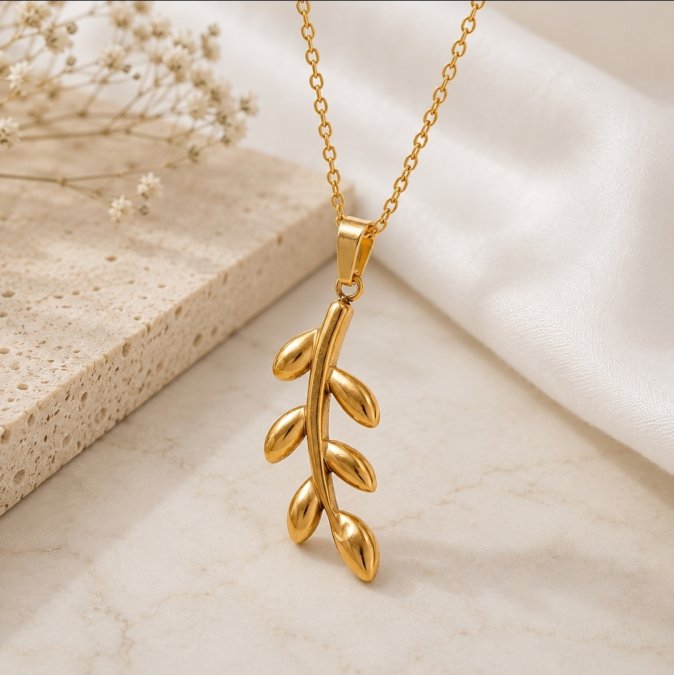
Here is the process, in order. It takes about five minutes once you've chosen your pieces.
What you'll need:
- Two to four chains in different lengths
- One layering clasp or magnetic connector
- A soft cloth
- A mirror
- Pick your base layer. Choose the shortest chain first. This sets the whole stack.
- Add the second layer. Aim for a two-inch gap from the first.
- Add the anchor. Place your longest chain last, usually your statement piece.
- Check the spacing. Each chain should sit clear of the one above it.
- Attach your connector. Fasten all chains to the layering clasp at the back.
- Test the weight. Move your head side to side. If it pulls, rebalance.
- Adjust the front. Nudge pendants so they sit centered and untwisted.
A good starting stack: a 16-inch delicate chain, an 18-inch paperclip chain, and a 20-inch pendant. The Aria Gold Paperclip Necklace works well as the middle layer, and the KARINA Butterfly Necklace adds a soft focal point up top.

Common Layering Mistakes to Avoid
The biggest mistakes are length clashes and hardware shortcuts. Both are easy to fix once you know what to look for.
- Wearing two chains at the exact same length
- Skipping a connector and letting clasps bunch at the back
- Overloading a thin chain with a heavy pendant
- Mixing reactive metals on sensitive skin
- Storing stacks loose in a drawer
- Ignoring neckline when choosing lengths
Building a stack that looks intentional takes a little planning, but the payoff is a look you can wear every day without fuss. The hard part is finding pieces that hold up to daily wear, and that's where Zoha Los Angeles comes in. Our 18k gold plated stainless steel necklaces are hypoallergenic, water-resistant, and backed by a lifetime warranty against rust and tarnish. Each order ships with a free gift box, so a layered set makes an easy gift for Eid or Ramadan. Shop Now and build a stack that lasts.
Frequently Asked Questions
How do you layer necklaces without them tangling?
Keep at least a 2-inch gap between each chain so they sit at different lengths and rarely cross. Use a layering clasp or magnetic connector to join multiple chains into one unit, which stops them from twisting around each other. Choose chains with different link styles, like a paperclip chain under a delicate cable chain, because identical textures grip and knot more easily. Store each necklace separately when you take them off.
How do you choose the right chain lengths for layering?
Start with a choker or 16-inch base layer, then add an 18-inch mid layer, and finish with a 20 to 24-inch pendant or statement piece. A 2-inch gap between each layer keeps the stack visually clean and prevents overlap. The best chain lengths for layering necklaces depend on your neckline: crew necks suit 16 to 18 inches, while V-necks and scoop necks look balanced with a longer 22 to 24-inch piece.
Does waterproof jewelry mean it won't tarnish?
Waterproof means the piece can handle sweat, handwashing, and rain without losing its finish, but it does not make jewelry immune to every chemical. Chlorine, saltwater, perfume, and harsh soaps can still wear down plating over time. Pieces like the Aria Gold Paperclip Necklace are water-resistant, sweatproof, and tarnish-free, and they carry a lifetime warranty against rust and tarnish. Rinse and dry after swimming to extend the finish.
Can you mix gold-plated and solid gold jewelry?
Yes, mixing gold-plated and solid gold pieces works when the tones match, such as warm 18k gold plating next to 14k or 18k solid gold. Keep the visual weight balanced: pair one solid gold anchor piece with lighter plated chains. To protect the plating, avoid rubbing the two against each other for long periods, and follow waterproof gold-plated jewelry care by drying each piece before storage.