
Table of Contents
- Hypoallergenic Jewelry: What the Label Really Means
- Common Metals That Cause Allergic Reactions
- Signs of Jewelry Allergy You Shouldn't Ignore
- Nickel-Free vs Hypoallergenic Jewelry: Key Differences
- The Best Hypoallergenic Jewelry for Sensitive Skin
- How to Test Jewelry for Metal Allergies at Home
- Why Hypoallergenic Jewelry Can Still Tarnish
- How to Shop for Hypoallergenic Jewelry
- Conclusion
- Frequently Asked Questions
Last Updated: September 12, 2026
Hypoallergenic Jewelry: What the Label Really Means
Hypoallergenic jewelry is jewelry marketed as less likely to trigger an allergic skin reaction, but the term carries no legal definition or government standard. That gap matters more than most shoppers realize. At Zoha Los Angeles, we field questions every week from customers who reacted to a "hypoallergenic" necklace from another brand and want to know what the word actually guarantees. The honest answer: very little on its own. Below, we break down what the label does and doesn't promise, which metals cause reactions, and how to shop for pieces your skin can tolerate.
Hypoallergenic describes an item formulated to reduce the likelihood of an allergic response. It is a marketing claim, not a measured specification.
Why No Regulation Governs the Term
No federal agency defines, tests, or certifies hypoallergenic jewelry. The Federal Trade Commission's guidance on advertising claims requires marketers to substantiate claims, but "hypoallergenic" has no standardized threshold a product must meet. Any brand can print it on a tag.
That means two necklaces labeled hypoallergenic can contain completely different metals. One may be pure titanium; another may be brass with a thin gold wash. The label tells you nothing about which.
What can you trust instead? Look for specific metal disclosures. A brand that names its base metal and plating thickness is giving you verifiable information. A brand that only says "hypoallergenic" is asking you to take its word.
Common Metals That Cause Allergic Reactions
Nickel is the leading cause of metal contact allergy, and it hides in more jewelry than most people expect. According to dermatology research on contact dermatitis, nickel allergy affects a meaningful share of adults, with women affected far more often than men due to greater jewelry exposure.
Nickel, Cobalt, and Chromium
These three metals account for the majority of jewelry reactions:
- Nickel: Found in white gold, some yellow gold alloys, stainless steel grades, and costume jewelry. The most common trigger by a wide margin.
- Cobalt: Often present alongside nickel in alloys and in some cemented carbides. Can cause reactions in nickel-sensitive people.
- Chromium: Used in leather tanning and some metal plating. Less common in fine jewelry but present in costume pieces.
Reactions typically appear where the metal touches skin: earlobes, wrists, fingers, and the neck. Sweat and friction accelerate the process by helping metal ions leach out of the alloy.

Signs of Jewelry Allergy You Shouldn't Ignore
Redness, itching, and a raised rash at the contact point are the classic signs of a jewelry allergy, and they usually appear within hours to a few days of wear. The medical term is allergic contact dermatitis.
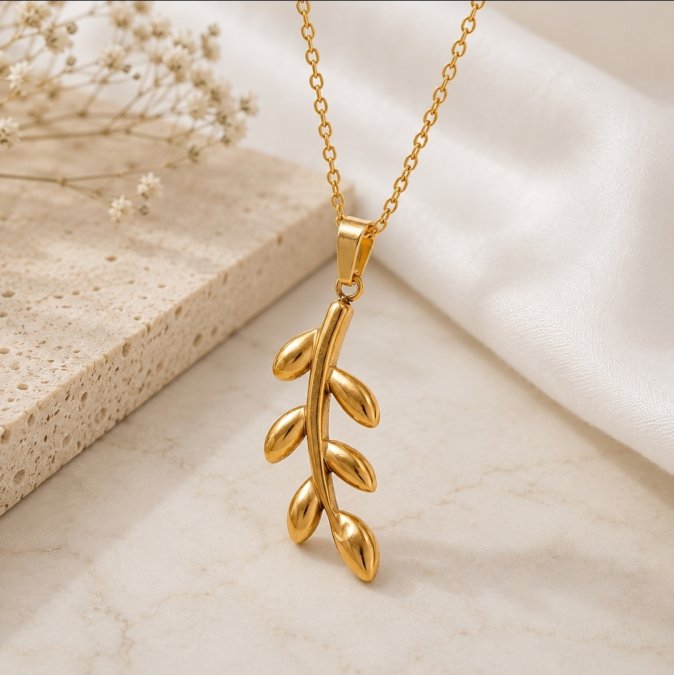
Watch for these symptoms:
- Itchy, red patches confined to where the jewelry sits
- Small bumps, blisters, or weeping skin in severe cases
- Dry, scaly patches that persist after removing the piece
- Darkening or discoloration of the skin under the jewelry
A common mistake is assuming a rash means poor hygiene. It almost never does. Metal sensitivity is an immune response, and it tends to worsen with repeated exposure rather than fade.
Nickel-Free vs Hypoallergenic Jewelry: Key Differences
Nickel-free jewelry contains no nickel by design, while hypoallergenic jewelry is simply marketed as unlikely to cause reactions. Only one of those is a specific, checkable claim.
Label |
What It Means |
Verifiable? |
|---|---|---|
Hypoallergenic |
Reduced likelihood of reaction |
No standard |
Nickel-free |
No nickel content |
Sometimes, by assay |
Lead-free |
No lead content |
Sometimes, by assay |
Surgical-grade |
Meets a known alloy spec |
Yes, if grade named |
If nickel is your trigger, seek "nickel-free" over "hypoallergenic." If you react to multiple metals, you need the base metal named outright.
The Best Hypoallergenic Jewelry for Sensitive Skin
Titanium, platinum, and surgical-grade stainless steel are the most reliable choices for sensitive skin because they resist corrosion and release few metal ions. Niobium and 14k or higher yellow gold also work well for many people.
Titanium, Platinum, and Surgical-Grade Stainless Steel
- Titanium: Lightweight, strong, and biocompatible. Widely used in medical implants, which says something about its skin tolerance.
- Platinum: Dense, precious, and naturally low-reactivity. Expensive but effectively inert against skin.
- Surgical-grade stainless steel: Contains nickel but in a bound form that releases very little. Safe for most, though not everyone.
- 14k gold: Higher gold content than 10k, so less base metal exposed. Still alloyed, so not universally safe.
For everyday pieces, stainless steel with quality plating offers the best balance of durability and skin tolerance. Zoha Los Angeles builds its collection on 18k gold-plated stainless steel, which pairs a low-reactivity base with a tarnish-resistant finish.
How to Test Jewelry for Metal Allergies at Home
A dermatologist-administered patch test is the only reliable way to confirm a metal allergy. Home testing can narrow things down but cannot diagnose. The distinction matters: a positive home screen tells you a suspect piece contains a known allergen; it does not tell you that your skin is reacting to that allergen, or that the allergen is the only one involved.
Step 1: Screen the Jewelry, Not Your Skin
The most useful at-home tool is a dimethylglyoxime (DMG) nickel test kit. DMG is a chemical reagent that turns pink or red in the presence of nickel ions. You apply a drop to a cotton swab, rub the metal for a few seconds, and watch for a color change.
What DMG kits do well:
- Confirm whether a piece of costume jewelry, a watch back, or a belt buckle is releasing nickel.
- Distinguish between a "nickel-free" claim and reality on a specific item.
- Cost very little and require no lab.
What DMG kits cannot do:
- Detect cobalt, chromium, or other allergens, DMG is nickel-specific.
- Tell you whether your skin is sensitized to the nickel it finds.
- Test through plating. If a piece is gold-plated over a nickel-containing base, a surface swab may read negative while wear-through later exposes the allergen.
Step 2: Isolate the Trigger With a Wear Test
If you react to some jewelry but not all, a controlled wear test can help you narrow the field. The goal is to change one variable at a time.
- One piece at a time. Wear a single item for 48 hours on clean, unbroken skin. Log any reaction, redness, itching, bumps, and its timing.
- Rotate metals, not styles. If a stainless steel ring irritates you but a titanium one does not, the difference is the alloy, not the design.
- Use the inner arm for suspect pieces. Tape a small piece to your inner forearm for 24 hours. This is cruder than a patch test but useful for screening.
- Watch for delayed reactions. Allergic contact dermatitis often peaks 24 to 72 hours after exposure, not immediately. A piece that feels fine on day one can still be the culprit.
A common pattern: someone reacts to a white gold ring but not a yellow gold one of the same karat. White gold is frequently alloyed with nickel or palladium, while yellow gold typically uses silver, copper, and zinc. The reaction tracks the alloy, not the color.
Step 3: Get a Real Diagnosis
If you want a definitive answer, ask a dermatologist about patch testing. A standard patch test applies small amounts of specific metal salts, nickel sulfate, cobalt chloride, potassium dichromate, to your back under tape, then reads the skin at 48 and 96 hours. It identifies which metals your immune system has been sensitized to, which is the information that guides every future purchase.
Options for at-home screening:
- Nickel test kits: Chemical swabs that change color on contact with nickel. Useful for spotting the metal in a suspect piece.
- The 24-hour wear test: Tape a small piece to your inner arm for a day and watch for a reaction. Crude but informative.
- Jewelry-free zones: Wear the piece on clothing rather than skin to see if symptoms disappear.
For a definitive answer, ask a dermatologist about patch testing. It identifies the specific metal triggering your reaction, which guides every future purchase.
Why Hypoallergenic Jewelry Can Still Tarnish
Even hypoallergenic jewelry tarnishes because tarnish is a surface reaction, not an allergy issue. Sweat, lotions, perfume, and air exposure oxidize the outer layer over time. The metals that resist corrosion best, like titanium and platinum, tarnish least.
Where the label misleads: a hypoallergenic piece with thin plating can wear through and expose the base metal beneath. Once that happens, both the finish and the skin-safety benefit degrade together. This is why maintenance matters as much as the initial material.
Care habits that extend both:
- Remove jewelry before swimming, showering, or heavy sweating
- Wipe pieces with a soft cloth after wear
- Store in a dry pouch away from humidity
- Avoid direct contact with perfume and lotions
Zoha Los Angeles finishes its pieces with a tarnish-resistant coating and water-resistant construction to slow this process, though no plated jewelry lasts forever without care.
How to Shop for Hypoallergenic Jewelry
Buy from brands that name their materials and explain their construction, not just their marketing. The label alone tells you almost nothing.
A practical checklist:
- Does the listing name the base metal (stainless steel, titanium, brass)?
- Is the plating type and thickness stated?
- Does the brand say "nickel-free" if you're nickel-sensitive?
- Are care instructions provided?
- Can you find real customer reviews about skin tolerance?
If a listing only says "hypoallergenic" with no material detail, treat that as a yellow flag. Zoha Los Angeles lists the base metal and plating on every product, so you know what touches your skin before you buy.
Conclusion
The word "hypoallergenic" is a starting point, not a guarantee, and the only real protection is knowing your trigger metal and checking what a piece is actually made of. If nickel or another metal has caused reactions before, read the material specs before you fall for a tag. Zoha Los Angeles crafts 18k gold-plated, tarnish-resistant jewelry on a stainless steel base, with hypoallergenic materials and water-resistant construction designed for sensitive skin and daily wear. Every piece ships in a free gift box, ready to wear or give. Shop now and find jewelry your skin can live in.
Frequently Asked Questions
Can I have a nickel allergy if I have a 14k gold allergy?
Yes. Most 14k gold jewelry contains nickel or other base metals in its alloy. A reaction to 14k gold is often a nickel allergy triggered by the alloy, not the gold itself. If you react to 14k gold, ask a dermatologist for a patch test to confirm which metal is causing the problem.
Is hypoallergenic the same as nickel-free?
No. Hypoallergenic is an unregulated marketing term that means the piece is less likely to cause a reaction, but it may still contain small amounts of nickel. Nickel-free means the jewelry contains no nickel at all. If you have a confirmed nickel allergy, look for pieces explicitly labeled nickel-free rather than just hypoallergenic.
Will hypoallergenic jewelry tarnish?
It can. Tarnish is caused by oxidation and corrosion, not by allergens. Sterling silver tarnishes naturally, and gold-plated pieces can discolor when the plating wears thin. Materials like titanium, platinum, and surgical-grade stainless steel resist tarnish better. Proper storage and keeping jewelry dry between wears slows tarnish on any metal.
What are the best metals for sensitive skin?
Titanium, platinum, surgical-grade stainless steel, and 14k or higher gold are the safest choices for sensitive skin. These metals are biocompatible and resist corrosion, which reduces metal leaching. Sterling silver works for many people but contains copper, which can irritate very sensitive skin. Avoid base metals and unknown alloys.