

Table of Contents
- What Is 18k Gold-Plated Jewelry?
- How Long Does Gold Plating Last With Daily Wear?
- Gold-Plated vs. Gold Vermeil vs. Gold-Filled: What's the Difference?
- Factors Affecting 18k Gold Plating Longevity
- How to Clean Gold Plated Jewelry to Maintain Luster
- Signs of Wear and Tarnishing: When to Repair or Replace
- Is 18k Gold-Plated Jewelry Worth the Investment?
- Allergy and Sensitivity Guide: Is 18k Gold-Plated Jewelry Hypoallergenic?
- Conclusion: Making the Right Choice for Everyday Wear
- Frequently Asked Questions
Last Updated: September 12, 2026
What Is 18k Gold-Plated Jewelry?
18k gold plated jewelry is base metal jewelry finished with a thin layer of 18-karat gold through electroplating or physical vapor deposition. The "18k" refers to the gold layer's purity: 75% gold mixed with other metals. The base underneath, usually brass, copper, or stainless steel, does the structural work.
That distinction matters more than most buyers realize. You are not buying gold. You are buying a gold surface, and everything about how long that surface survives depends on how thick it is, how it was applied, and what you do to it afterward.
At Zoha Los Angeles, we build our pieces on high-grade stainless steel and finish them with 18k gold plating, a combination chosen specifically because stainless steel resists the corrosion that makes cheaper base metals discolor faster. The Sparkly Paperclip Link Necklace and the infinity necklace in gold and silver - Amna are examples of our 18k gold-plated necklaces, crafted with precision and utilizing tarnish-resistant and hypoallergenic materials to ensure lasting elegance and comfort. The U.S. Federal Trade Commission's jewelry advertising guidance is clear that plated products must be labeled as such, which is why you will never see us call a plated piece "solid gold."

The Science Behind Gold Plating: Electroplating and PVD Explained
Electroplating is the traditional method. The base metal sits in a solution containing dissolved gold, an electrical current runs through it, and gold ions bond to the surface. It is inexpensive and produces a warm, classic finish. It also produces a coating measured in single microns, which is thin enough that friction and chemicals can wear through it.
PVD coating (physical vapor deposition) works differently. Gold is vaporized in a vacuum chamber and deposited onto the base metal as a fine, dense layer. PVD coatings bond at a molecular level, resist scratching better, and hold up longer against sweat and water. The trade-off is cost and a slightly different color depth.
How Long Does Gold Plating Last With Daily Wear?
Most 18k gold plating lasts between six months and two years with daily wear, depending on plating method, coating thickness, and how much contact it has with moisture and chemicals. PVD coatings sit at the top of that range. Thin electroplated layers sit at the bottom.
A ring worn every day, washed with soap, and exposed to lotion will degrade faster than a necklace worn twice a week. That is not a defect. It is the physics of a coating measured in microns.
What most guides miss is that plating rarely fails evenly. It wears first at the points of highest friction: the inside of a ring band, the clasp of a bracelet, the post of an earring. You will notice a dull patch before you notice full discoloration.
Gold-Plated vs. Gold Vermeil vs. Gold-Filled: What's the Difference?
The three terms describe three different products, and sellers often blur them. Here is how they actually differ:
| Type | Gold Layer | Base Metal | Legal Standard | Typical Durability |
|---|---|---|---|---|
| Gold-plated | 18k gold, under 2.5 microns | Brass, copper, steel | No federal minimum | 6 months to 2 years |
| Gold vermeil | 10k+ gold, 2.5+ microns | Sterling silver only | FTC-defined | 2 to 5 years |
| Gold-filled | 10k+ gold, 5%+ of weight | Brass or copper core | FTC-defined | 5 to 30 years |
Gold vermeil is the middle ground: thicker gold over sterling silver, held to a defined standard. Gold-filled jewelry bonds a substantial gold layer to a base core, and it can outlast vermeil by years.
The honest trade-off: vermeil and gold-filled cost considerably more than gold-plated. For a piece you will wear daily and want to keep for a decade, that premium is worth it. For a trend-driven accessory or a gift, 18k gold plating delivers the same visual finish at a fraction of the price.
Factors Affecting 18k Gold Plating Longevity
Five variables decide how long your plating survives, and only two of them are within the manufacturer's control.
- Coating thickness - measured in microns; thicker layers take longer to wear through
- Application method - PVD outlasts electroplating under identical conditions
- Base metal quality - stainless steel resists corrosion that accelerates plating failure
- Skin acidity - some wearers' natural chemistry degrades plating faster
- Exposure - water, sweat, perfume, and cleaning products all attack the gold layer
Skin Acidity, Moisture, and Chemical Reactions
Here is the mechanism most articles skip. Gold itself is inert, but the metals alloyed with it in 18k gold, plus the base metal beneath, are not. Sweat is mildly acidic and contains chlorides. When that moisture reaches exposed base metal through microscopic pores or worn spots, oxidation begins. Copper and brass oxidize into green or black compounds, which is the discoloration people describe as jewelry "turning."
This is why hypoallergenic construction matters. Nickel allergy is one of the most common contact sensitivities, and nickel is a frequent component of cheap base alloys. A stainless steel base with a properly bonded gold layer keeps nickel out of contact with your skin.
How to Clean Gold Plated Jewelry to Maintain Luster
Cleaning gold-plated jewelry correctly takes about two minutes and requires nothing you do not already own. The rule is simple: mild soap, lukewarm water, soft cloth, and no scrubbing. But the why behind each step is what separates a piece that holds its finish for two years from one that dulls in six months.
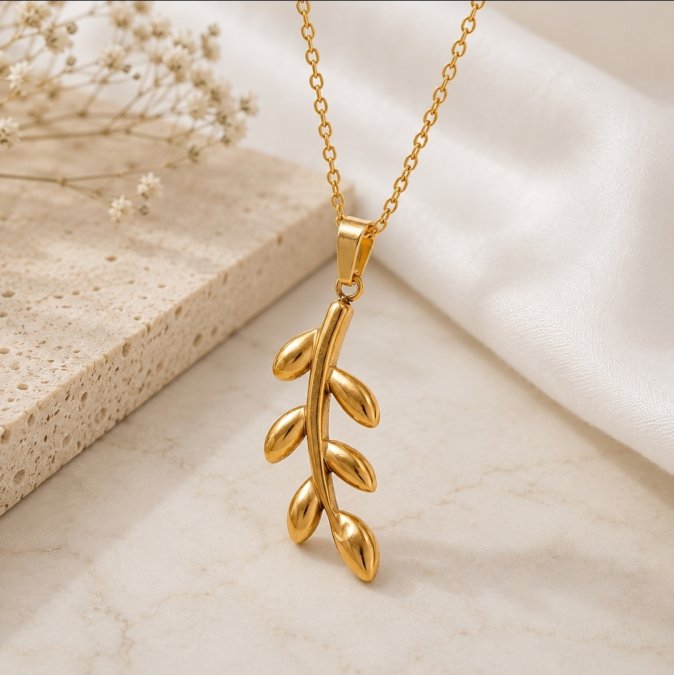
What You Are Actually Removing
Every time you wear a plated piece, three things accumulate on the surface: sebum (skin oil), dried sweat residue (which contains chloride salts and trace urea), and whatever you applied to your skin, lotion, sunscreen, perfume. Sebum is mildly acidic and, over time, its fatty acids can etch the very top molecular layers of the gold. Sweat residue is worse: the chloride ions in dried sweat are the same chemistry that attacks exposed base metal at worn spots, accelerating the green or black oxidation people call "tarnishing."
So cleaning is not cosmetic. It is removing the reactants that drive the degradation chemistry before they have time to work.
The Sequence, and Why Each Step Matters
- Mix a few drops of mild dish soap into lukewarm water. Lukewarm, not hot, because heat expands the base metal slightly faster than the gold layer, and repeated thermal cycling can widen microscopic pores at the plating boundary. Dish soap (not hand soap, not body wash) is formulated to break down oils without leaving a residue film.
- Dip a soft cloth into the solution and wipe the piece gently. Microfiber or a well-worn cotton t-shirt works. Paper towels and rough terry cloth are abrasive at the micron scale and will scratch the gold.
- Use a soft-bristled brush only on textured areas or clasps. A clean baby toothbrush is ideal. Clasps and chain links trap the most sebum and are the first places plating wears, so they need the most attention, but also the gentlest touch.
- Rinse with clean lukewarm water, never hot. Hot water can loosen the bond at the plating edge on lower-quality pieces.
- Pat completely dry with a lint-free cloth. Do not rub. Water left in crevices (clasp springs, stone settings) becomes a site for mineral spotting and, on brass or copper bases, oxidation.
- Let the piece air dry for another ten minutes before storing. Any residual moisture sealed inside a jewelry box or pouch becomes a microclimate for tarnish.
What You Must Never Use, and Why
- Ultrasonic cleaners, the cavitation bubbles that clean solid gold also vibrate the plating at its boundary and can lift it in sheets.
- Abrasive polishes and jeweler's rouge, these are designed to remove a thin layer of metal to reveal shine. On plated jewelry, the "thin layer" they remove is your gold.
- Baking soda paste and toothpaste, both are mild abrasives suspended in a liquid that can seep under worn plating edges and accelerate base-metal oxidation.
- Ammonia-based cleaners and silver dips, these dissolve copper and nickel compounds, which is exactly what your base metal is made of.
The Gemological Institute of America's jewelry care resources recommends the same mild-soap approach for plated and finished pieces.

The Two-Minute Maintenance Protocol
For routine upkeep between deep cleans, wipe your jewelry with a dry soft cloth after each wear before it goes back in the box. That single habit removes the sweat and oils that drive oxidation. Once a month, do the full soap-and-water sequence above. Once every three months, inspect the high-friction zones, inside a ring band, the clasp of a bracelet, the post of an earring, under bright light for the first sign of dulling.
Signs of Wear and Tarnishing: When to Repair or Replace
Plating failure follows a predictable sequence, and catching it early changes your options.
- Stage 1: Dulling. The surface loses its mirror finish but color holds. Fix: a gentle clean.
- Stage 2: Color shift. A faint yellow or gray cast appears at friction points. Fix: rotate the piece, reduce moisture exposure.
- Stage 3: Flaking or green marks. Base metal is exposed. Fix: replating or replacement.
Repairability is where plated jewelry divides sharply from solid gold. A jeweler can re-plate a piece, but the cost often approaches or exceeds the original purchase price for inexpensive items. Solid gold can be polished and reshaped indefinitely because the material is gold all the way through. Plated jewelry is a finish, and finishes get redone or replaced.
Practical guidance: if a plated piece costs under $60 and shows Stage 3 wear, replace it. If it carries sentimental value, ask a jeweler for a replating quote before deciding.
Is 18k Gold-Plated Jewelry Worth the Investment?
For everyday wear, 18k gold plated jewelry is worth buying when you accept what it is: a beautiful finish with a finite lifespan, not a precious metal holding its value. Judged on that basis, it wins on cost per wear for most people, but only if you run the actual numbers rather than trusting the marketing.
The Cost-Per-Wear Math
Cost per wear is the only honest way to compare plated jewelry against solid gold, because the two products fail on completely different timelines.
Take a well-made 18k plated piece in the $50-$80 range with a PVD coating. Under daily wear with the maintenance protocol above, a realistic service life is 18-24 months before visible dulling at friction points. At $65 and 700 days of wear, that is roughly 9 cents per wear.
Now compare a solid 14k gold piece at $400 with a 30-year service life. That is about 11,000 days, or roughly 4 cents per wear, cheaper over the long run, but only if you actually keep and wear the piece for three decades. Most people do not. They rotate, they change taste, they lose earrings. The plated piece wins on cost per wear for anyone whose wearing horizon is under about five years.
Where plated jewelry loses the math entirely: pieces worn in the shower, pool, or gym. Chlorine and hot water can cut service life to six months or less, which pushes cost per wear above 30 cents, worse than a mid-tier gold-filled piece that would have lasted five years.
The Repairability Question Most Guides Skip
When plating reaches Stage 3 wear (exposed base metal, green or black marks), you have three options, and the economics are unforgiving:
- Replate it. A jeweler can strip and re-plate a piece, but the setup cost, cleaning, masking stones, running the bath, is largely fixed regardless of the item's value. For a piece that originally cost under $60, a replating quote will frequently approach or exceed the purchase price. Ask for the quote before you commit.
- Replace it. For inexpensive pieces, this is almost always the rational choice. The replacement comes with fresh plating and a new warranty window.
- Retire it. If the piece has sentimental value, stop wearing it daily and treat it as an occasional piece. Slowing the wear rate is free; reversing it is not.
This is the structural difference between plated and solid gold. Solid gold can be polished, reshaped, and repaired indefinitely because the material is gold all the way through. Plated jewelry is a finish, and finishes get redone or replaced, never restored.
When Plated Jewelry Is the Right Buy
- You want the look of gold without solid gold pricing
- You rotate pieces rather than wearing one daily for years
- You want hypoallergenic construction for sensitive skin
- You are buying a gift where design and meaning matter more than resale value
- Your wearing horizon is under five years
When It Is Not
- You want an heirloom piece
- You never take your jewelry off, including in the shower and pool
- You expect the piece to hold resale value
- You want a single pair of earrings to last a decade of daily wear
Investment value in the financial sense belongs to solid gold. Value in the everyday sense, meaning a piece you actually wear, belongs to well-made plating. Zoha Los Angeles pieces like the Sparkly Paperclip Link Necklace or the Laila Hoop Earrings sit in that second category: stainless steel cores, 18k gold plating, built for daily rotation rather than a safe.

Allergy and Sensitivity Guide: Is 18k Gold-Plated Jewelry Hypoallergenic?
Plated jewelry is hypoallergenic only when the base metal and the plating process keep nickel and other sensitizers away from your skin. The gold layer itself is not the problem. The base metal underneath is.
If your skin reacts to most jewelry, the sequence to check is:
- Base metal - stainless steel or titanium over brass or unknown alloys
- Nickel content - ask directly; a reputable seller will confirm
- Coating integrity - intact plating blocks contact; worn plating does not
- Clasp and post materials - these touch skin most and wear first
A piece marketed as hypoallergenic that develops worn spots at the clasp is no longer hypoallergenic at that spot. That is why coating integrity and allergy safety are the same conversation.
Conclusion: Making the Right Choice for Everyday Wear
The honest answer to whether 18k gold-plated jewelry is worth it for everyday use comes down to expectations. Buy it as a finish with a lifespan, care for it with the two-minute routine above, and it will hold its luster far longer than the cheap plated pieces that gave the category a bad name. Buy it expecting solid gold permanence and you will be disappointed by month eight.
Frequently Asked Questions
How long will 18k gold-plated jewelry last with daily wear?
With daily wear, 18k gold plating typically lasts 6 to 24 months before visible fading, depending on coating thickness, skin acidity, and exposure to moisture or friction. Pieces with a thicker micron layer and a protective PVD coating can last longer. To extend life, remove jewelry before showering, swimming, or exercising, and clean it regularly to remove oils and sweat.
Is 18k gold-plated jewelry hypoallergenic?
Many 18k gold-plated pieces are hypoallergenic if the base metal is stainless steel or titanium and the plating is nickel-free. However, once the plating wears away, the exposed base metal can trigger reactions in people with nickel allergies. If you have sensitive skin, look for jewelry labeled hypoallergenic with a stainless steel base and avoid pieces with unknown alloys.
Does sweat or water ruin 18k gold-plated jewelry?
Sweat and water can accelerate tarnishing and plating wear. Chlorine, salt, and body oils break down the thin gold layer over time. While water-resistant plating helps, it is not waterproof. To protect your jewelry, remove it before swimming, bathing, or heavy sweating, and dry it promptly if it gets wet.
What is the difference between gold-plated and gold-filled jewelry?
Gold-plated jewelry has a thin layer of gold (typically 0.5 to 2.5 microns) electroplated over a base metal like brass or stainless steel. Gold-filled jewelry mechanically bonds a thicker layer of gold (at least 5% of total weight) to a base metal, making it more durable and resistant to tarnishing. Gold-filled costs more but lasts years longer with daily wear.
Plated jewelry only disappoints when the construction behind the plating is hidden. Zoha Los Angeles builds on high-grade stainless steel with 18k gold plating, hypoallergenic materials, and water-resistant finishes, so the piece you wear daily is engineered for daily wear. Browse the collection and find the piece that fits your routine, not the other way around.