

Table of Contents
- Why Gold Plated Jewelry Requires Special Care
- Supplies You'll Need to Clean Gold Plated Jewelry
- Step-by-Step Process: How to Clean Gold Plated Jewelry Safely
- How to Prevent Gold Plated Jewelry from Tarnishing
- How to Store Gold Plated Jewelry Properly
- What to Avoid When Cleaning Gold Plated Jewelry
- When to Seek Professional Cleaning or Re-plating
- Gold Plated vs. Solid Gold: Understanding the Difference
- Conclusion
- Frequently Asked Questions
Last Updated: September 4, 2026
Why Gold Plated Jewelry Requires Special Care
Gold plated jewelry is a layer of real gold bonded to a base metal core through electroplating, which gives it the look of solid gold at a fraction of the cost. At Zoha Los Angeles, we design our 18k gold plated pieces with tarnish-resistant and hypoallergenic materials, but the thin layer of gold means how you clean gold plated jewelry safely matters more than with solid pieces. The plating is delicate, and harsh treatment can wear it away, exposing the base metal underneath and causing irritation or discoloration.
The science is simple: gold itself does not tarnish, but the base metal beneath it reacts to moisture, humidity, and the oils on your skin. Once that protective coating thins or wears through, oxidation begins and you see dullness or a greenish tint. Many people assume their jewelry is ruined at that point. In reality, most of the time the issue is just surface soil and residue that a gentle cleaning routine would have prevented.
The good news is that maintaining plated jewelry takes only a few minutes every couple of weeks. This guide walks you through the exact process, the supplies that are safe to use, and the habits that extend the life of your plating.
Supplies You'll Need to Clean Gold Plated Jewelry
Before you start, gather everything on this short list. Using the right tools is the difference between preserving your plating and scratching it away.
Essential supplies for hand cleaning:
- Mild dish soap without bleach, citrus, or ammonia-based additives
- Warm water, not hot, in a small bowl
- Microfiber cloth or a lint-free cloth for drying and buffing
- Soft-bristled toothbrush reserved for jewelry cleaning only
- A clean, dry surface with a towel laid flat
The best gentle soap for gold plated jewelry is a plain dish soap like a basic grease-cutting formula. Avoid anything labeled as "deep cleaning," antibacterial, or containing lemon extracts, since these can be too aggressive for the plating.
Important: Gemstone Compatibility Check
If your gold plated piece contains gemstones, you must identify the stone type before cleaning. Some gemstones are porous and will absorb water, soap, and moisture, which can cause discoloration, clouding, or internal damage that cannot be reversed.
Do not soak or submerge:
- Pearls (both freshwater and saltwater)
- Opals
- Turquoise
- Coral
- Amber
- Emeralds
- Tanzanite
These stones should be cleaned with a barely damp microfiber cloth only, never soaked or rinsed under running water. If your piece contains one of these stones, skip the soaking step entirely and move directly to Step 3 (gentle surface cleaning with a damp cloth).
Harder gemstones like diamonds, sapphires, rubies, and topaz can tolerate the full soaking and gentle brushing process described in this guide, as they are non-porous and resistant to water damage.
The Gemological Institute of America's jewelry cleaning guidance recommends identifying stone hardness and porosity before any wet cleaning, which aligns with what professional jewelers suggest for plated pieces.
DIY vs. Commercial Cleaning Solutions
Many people wonder whether to use homemade solutions or store-bought jewelry dips. Here is the key difference:
Homemade mild soap solution (recommended for gold plated jewelry):
- Safe for all plating thicknesses
- Gentle enough for daily use
- Works well for light soil and oils
- Takes 5 minutes per piece
- Cost: pennies per cleaning
Commercial jewelry dips and ultrasonic cleaners (NOT recommended for gold plated jewelry):
- Formulated for solid gold, not plating
- Often contain ammonia or other solvents that dissolve thin gold layers
- Can strip plating in a single use
- Ultrasonic vibrations can separate plating from base metal
- Cost: $10-$30 per bottle or $50-$150 per professional cleaning
The reason commercial dips are dangerous for plated jewelry is chemical concentration. A store-bought ammonia-based cleaner is formulated at a strength that is safe for solid gold's thickness but will attack the micron-thin plating layer on plated pieces. Ultrasonic cleaners use vibrations at 40,000 Hz or higher, which can literally shake the plating loose from the base metal, especially on intricate designs or pieces with stone settings.
If you own both solid gold and gold plated pieces, do not use the same cleaning method for both. Reserve commercial solutions for solid gold only, and stick with the mild soap method for all plated jewelry.
Step-by-Step Process: How to Clean Gold Plated Jewelry Safely
The entire cleaning process takes about five minutes from start to finish. You will not need any special equipment, and you can do it over your bathroom sink or kitchen counter.
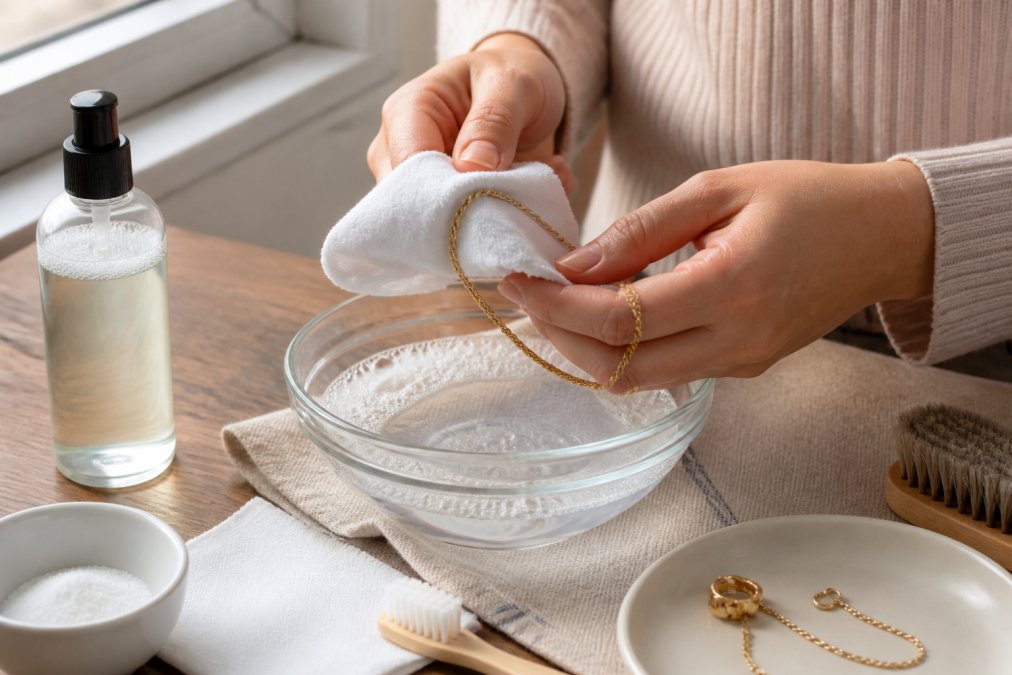
Step 1: Prepare Your Cleaning Solution
Fill a small bowl with warm water and add two to three drops of mild dish soap. Swirl the water gently to distribute the soap without creating heavy suds. The solution should feel barely slippery, not soapy to the point of being thick. If you are cleaning multiple pieces, prepare a fresh bowl rather than reusing the same water.
Step 2: Soak Your Jewelry
Place your gold plated jewelry into the bowl and let it sit for no more than two to three minutes. This soaking time loosens surface soil, perfume residue, and body oils without giving the water time to seep into any crevices. Do not walk away during this step. Prolonged soaking is one of the most common mistakes people make, and it can weaken the bond between the plating and the base metal.
Step 3: Gently Clean the Surface
Remove the piece from the bowl and lay it on your towel. Dip your soft-bristled toothbrush into the soapy water and brush the surface using small, circular motions with light pressure. Focus on the areas that touch your skin most, like the inside of rings and the clasp area of necklaces and bracelets. For flat surfaces, the microfiber cloth works better than the brush.
Step 4: Rinse Thoroughly
Rinse the piece under a gentle stream of lukewarm running water. Hold it over the bowl or a cup rather than directly over the sink drain, since small earrings and delicate chains can slip away easily. Make sure every trace of soap is gone. Soap residue left to dry on the surface will leave a dull film that looks like tarnish.
Step 5: Dry Your Jewelry Completely
Pat the piece dry with your microfiber cloth, then set it on a fresh dry section of the towel to air dry for five to ten minutes. Moisture is the enemy of gold plating, so do not skip this final air drying step. Once fully dry, give the piece a final gentle buff with the cloth to restore its shine. A quick buffing pass after each wear also removes oils before they have a chance to sit on the surface.
How to Prevent Gold Plated Jewelry from Tarnishing
Prevention is far easier than repair, and most tarnishing comes down to daily habits rather than cleaning technique. The most effective way to prevent gold plated jewelry from tarnishing is to keep it away from moisture, cosmetics, and harsh chemicals.
- Remove your jewelry before showering, swimming, or washing your hands
- Apply perfume, lotion, and hair products first, then put on your jewelry last
- Wipe each piece with a dry microfiber cloth after wearing to remove skin oils
- Avoid wearing plated pieces during workouts or heavy physical activity where sweat accumulates
The order of your getting-ready routine matters more than most people realize. Perfume residue and cosmetics contain alcohols and solvents that break down the plating over time. Spray your fragrance, let it dry completely, and then put on your necklace or earrings. This single habit extends the life of plated jewelry significantly.
The Jewelers of America care and maintenance resources emphasize that routine wiping and proper wearing habits do more for jewelry longevity than any deep cleaning method.
How to Store Gold Plated Jewelry Properly
Storing your pieces correctly is just as important as cleaning them. Humidity is a primary trigger for oxidation, so your storage location matters as much as the container you use.
Keep each piece in a separate soft pouch or a jewelry box with individual compartments. Storing pieces together allows them to rub against each other, which creates micro-scratches on the plating. For necklaces, hang them individually if possible, or lay them flat in a straight line to prevent tangling and knotting.
Avoid bathrooms entirely. The steam from showers creates a consistently humid environment that accelerates tarnishing. A bedroom dresser drawer or a closet shelf is a better choice. If you live in a humid climate, add a small silica gel packet to your jewelry box to absorb excess moisture.
What to Avoid When Cleaning Gold Plated Jewelry
Certain cleaning methods that work beautifully on solid gold will destroy gold plating. The list of what to avoid is short, but each item on it is non-negotiable. Understanding why each method is dangerous will help you make safe choices if you encounter unfamiliar cleaning advice.
Ultrasonic Cleaners
Ultrasonic cleaners use high-frequency sound waves (typically 40,000 Hz) to vibrate jewelry in a cleaning solution. These vibrations are powerful enough to dislodge microscopic particles of dirt, but they are also powerful enough to separate gold plating from the base metal underneath. The vibrations create stress at the bond line between the two layers, causing the plating to flake or peel away. This damage is often not visible immediately; it may appear as dull spots or areas of discoloration weeks after cleaning. Ultrasonic cleaners are safe for solid gold and most gemstones, but they are one of the fastest ways to ruin gold plated jewelry.
Ammonia-Based Jewelry Dips
Ammonia is a solvent that dissolves certain metals and compounds. Commercial jewelry dips like those sold in drugstores are formulated with ammonia at a concentration that is safe for solid gold's thickness, typically 14k to 24k gold, which is 585 to 999 parts per thousand. Gold plated jewelry, by contrast, has a layer of gold measured in microns (often 0.5 to 2.5 microns thick). A single soak in an ammonia-based dip can dissolve the entire plating layer in minutes, exposing the base metal underneath. Once the plating is gone, it cannot be restored with another cleaning, only through professional re-plating.
Baking Soda, Toothpaste, and Other Abrasives
Abrasive cleaners work by physically scrubbing away tarnish and dirt. On solid gold, this is safe because the gold is thick enough to withstand the friction. On plated jewelry, even a soft abrasive like baking soda or whitening toothpaste will scratch the plating surface. These scratches create grooves where tarnish can lodge and spread, and they also thin the plating layer with each use. Over time, repeated abrasive cleaning will wear through the plating entirely. The damage is cumulative and irreversible.
Hot Water
Hot water accelerates the chemical reactions that cause tarnishing and can weaken the electroplated bond between the gold layer and the base metal. Heat also causes metals to expand at different rates, gold and the base metal expand differently, which creates stress at the bond line. Additionally, hot water opens the pores of any porous gemstones in your piece, allowing water and soap to penetrate where they can cause permanent damage. Warm water (around 90-100°F) is sufficient for cleaning and avoids these risks.
Paper Towels and Rough Fabrics
Paper towels have a rough, fibrous texture that scratches delicate plating. Even one or two passes with a paper towel can create visible micro-scratches on the surface. Rough fabrics like cotton t-shirts or regular cloth napkins have the same effect. Microfiber cloths are specifically designed with ultra-fine fibers that lift oils and dirt without scratching, making them the only safe choice for drying and buffing plated jewelry.
Harsh Chemicals: Bleach, Vinegar, and Lemon Juice
Bleach is a strong oxidizing agent that will corrode both the gold plating and the base metal. Vinegar and lemon juice are acidic and will etch the surface of the plating, dulling its shine and creating a rough texture. These substances are sometimes recommended for solid gold jewelry, but they are far too aggressive for plating. Even a brief soak can cause visible damage.
Quick Reference: Safe vs. Unsafe Methods
| Method | Gold Plated | Solid Gold | Why |
|---|---|---|---|
| Mild soap + warm water | ✓ Safe | ✓ Safe | Gentle, non-reactive |
| Soft-bristled brush | ✓ Safe | ✓ Safe | Low friction |
| Microfiber cloth | ✓ Safe | ✓ Safe | Ultra-fine fibers |
| Ultrasonic cleaner | ✗ Unsafe | ✓ Safe | Vibrations separate plating |
| Ammonia dips | ✗ Unsafe | ✓ Safe | Dissolves thin plating |
| Baking soda | ✗ Unsafe | ✓ Safe | Scratches plating layer |
| Hot water | ✗ Unsafe | ✓ Safe | Weakens bond, damages stones |
| Vinegar or lemon | ✗ Unsafe | ✓ Safe | Etches and corrodes plating |
| Bleach | ✗ Unsafe | ✗ Unsafe | Oxidizes all metals |
The key takeaway: if a cleaning method is described as "powerful," "deep cleaning," or "professional strength," it is almost certainly unsafe for gold plated jewelry. Plating requires gentleness, not strength.
When to Seek Professional Cleaning or Re-plating
No matter how careful you are, plating eventually wears thin with daily wear. You will know it is time for professional attention when you see the base metal peeking through at the edges or on the underside of the piece. This appears as a slightly different color, often a dull yellow or gray, showing through the bright gold surface. Once the base metal is exposed, home cleaning will not fix it. The piece needs re-plating, which is a process where a jeweler applies a new layer of gold through electroplating.
Gold Plated vs. Solid Gold: Understanding the Difference
Gold plated jewelry consists of a thin layer of gold electroplated over a base metal, while solid gold is composed entirely of gold alloyed with other metals for strength. The practical difference comes down to three factors: durability, cost, and maintenance.
Solid gold can be cleaned aggressively, resized, and polished repeatedly without damage. Gold plated pieces require the gentle care outlined in this guide, and their plating will eventually wear through regardless of how well you maintain them. However, the price difference is substantial, which is why plated pieces are so popular for fashion-forward, everyday wear.
For many people, the right choice is a mix of both. Reserve solid gold for pieces you wear every single day and never remove, like a wedding band. Choose high quality gold plated jewelry for trend-driven pieces, statement designs, and jewelry you rotate based on your outfit. At Zoha Los Angeles, our 18k gold plated collection is designed with a tarnish-resistant finish and hypoallergenic base metals, making them suitable for sensitive skin and daily wear. Our water-resistant construction means they hold up well to the occasional splash, though we still recommend removing them before swimming or showering.
The Federal Trade Commission's jewelry industry guides provide useful background on how gold plating and gold content are defined and marketed, which helps consumers understand exactly what they are purchasing.
A common question we hear is whether plated jewelry turns skin green. This happens when the base metal reacts with sweat and skin oils, and it is a sign that either the plating has worn through or the base metal contains nickel or copper. Choosing hypoallergenic plated jewelry with a quality finish significantly reduces this risk.
Conclusion
Cleaning gold plated jewelry safely comes down to three habits: gentle cleaning with mild soap and warm water, thorough drying after every wash and wear, and proper storage away from humidity. Avoid abrasive tools and harsh chemical cleaners, and address plating wear early through professional re-plating rather than waiting until the base metal is fully exposed.
At Zoha Los Angeles, we craft our 18k gold plated pieces with tarnish-resistant and hypoallergenic materials, water-resistant construction, and a free gift box with every order. Whether you are looking for everyday essentials or a meaningful piece for a special occasion, our collection is designed to keep its brilliance with the simple care routine above. Get started with Zoha Los Angeles and find a piece that stays beautiful for years to come.
Frequently Asked Questions
What is the best cleaner for gold-plated jewelry?
Mild dish soap mixed with warm water is the safest and most effective cleaner for gold plated jewelry. This gentle solution removes surface soil and cosmetics residue without damaging the protective electroplating. Avoid commercial jewelry cleaners with ammonia-based formulas or harsh chemicals, as these can strip away the gold plating and expose the base metal underneath. For best results, use a soft-bristled toothbrush to gently scrub, then rinse thoroughly and air dry with a lint-free cloth.
How do you keep gold-plated jewelry from tarnishing?
Prevent tarnishing by minimizing exposure to moisture, humidity, cosmetics, and perfume residue. Store your pieces in a dry environment, preferably in a jewelry box or sealed container, away from direct sunlight. Remove jewelry before swimming, showering, or exercising. Apply cosmetics and perfume before putting on your jewelry to avoid chemical reactions that accelerate oxidation. Regular cleaning with mild soap and water helps maintain the protective coating and prevents corrosion of the base metal.
Can you use baking soda to clean gold plated jewelry?
Baking soda is too abrasive for gold plated jewelry and should be avoided. Its grainy texture can scratch and wear away the delicate electroplating layer, causing dullness and exposing the base metal. Instead, stick with mild dish soap and warm water, which safely removes tarnish and surface soil without damaging the plating. If you're dealing with stubborn tarnish, a soft-bristled toothbrush provides gentle mechanical cleaning without the risk of abrasion.
How often should you clean gold plated jewelry?
Clean gold plated jewelry every 2-4 weeks with regular daily wear, or as needed when you notice dullness or surface soil. Frequent gentle cleaning prevents tarnish buildup and maintains the brilliance of the electroplating. If you wear your pieces occasionally or store them most of the time, clean them before wearing and again after to remove any dust or moisture accumulated during storage. Consistent maintenance extends the life of the plating and keeps your jewelry looking like new.
This article was written using GrandRanker